Source Static Tank Washing Spray Ball for Fermenters, Tanks, and Washers
Compare 30 static tank washing spray ball options from verified Chinese suppliers. These nozzles feature full cone spray patterns, varying thread sizes, and materials like stainless steel for efficient tank and fermentor cleaning applications.
Key considerations
Products List
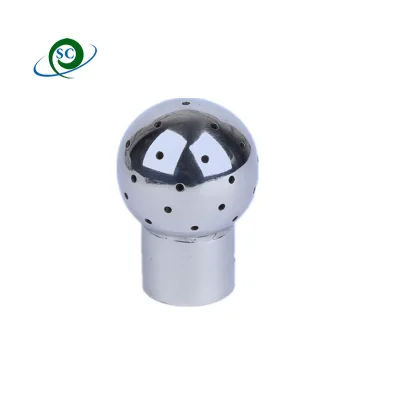
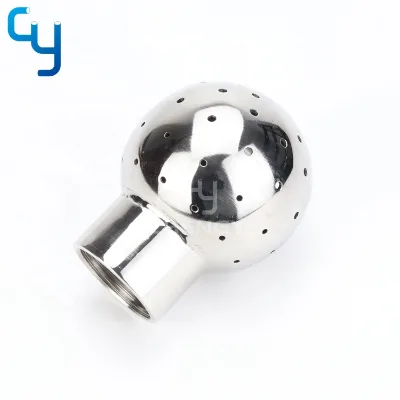
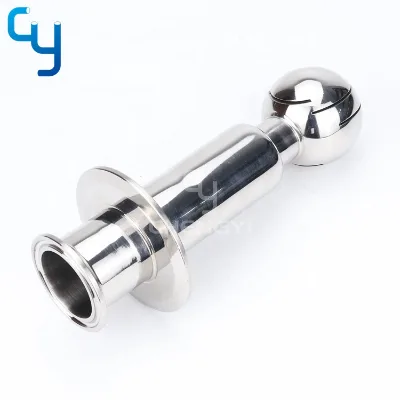
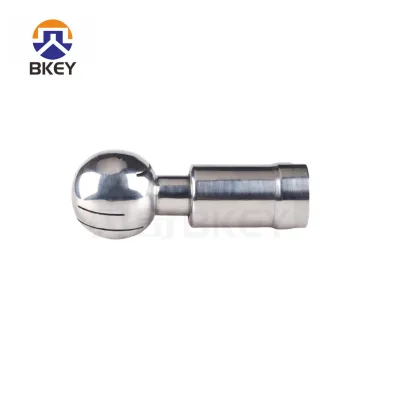


Comprehensive Sourcing Guide
Strategic Sourcing Guide for Static Tank Washing Spray Balls
Understanding the Product Category and Core Functionality
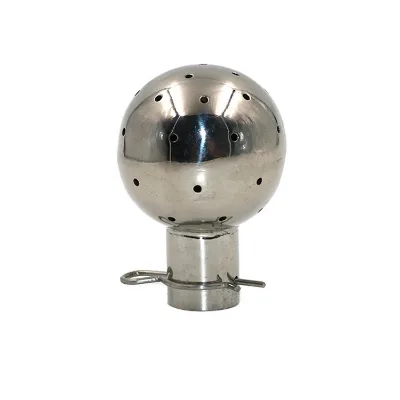
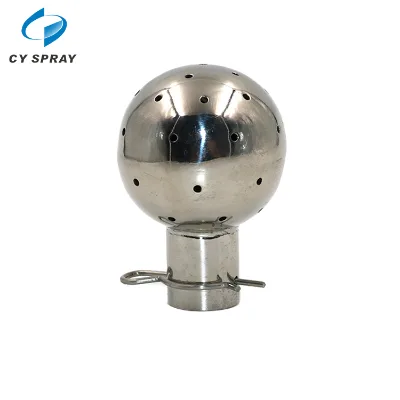
The static tank washing spray ball, often categorized under industrial cleaning nozzles or sanitary spray balls, is a critical component in maintaining hygiene and operational efficiency within processing industries. These devices are designed to rotate or remain fixed to provide comprehensive coverage of tank interiors, ensuring that residues, contaminants, or product buildup are effectively removed without the need for manual intervention. The core functionality relies on hydraulic pressure to atomize cleaning fluids into a specific spray pattern, typically a full cone, which maximizes surface contact and cleaning velocity.
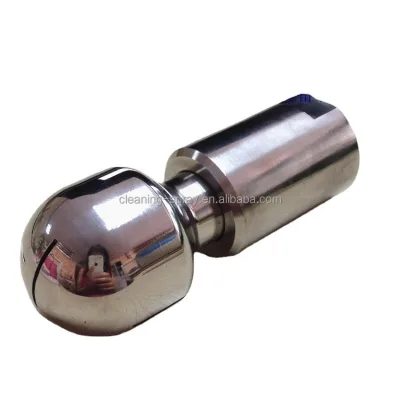
In the current market, these products are frequently identified by variations such as "360 Degrees to Clean Nozzle," "fixed tank cleaning spray ball," or "rotating cleaning ball." The distinction between static and rotating models is significant for procurement decisions. While some units are engineered to remain fixed, relying on the momentum of the fluid to create a sweeping action, others are designed with specific mechanisms to ensure a 360-degree rotation. The observed product attributes indicate that these units are primarily constructed from materials such as PP, PVC, and various grades of stainless steel, including SS303, SS304, SS316, and 316L. The choice of material is paramount, as it dictates the chemical resistance and longevity of the nozzle in harsh environments.
Technical Specifications and Material Compatibility
When evaluating potential suppliers, buyers must scrutinize the technical specifications provided, as these vary significantly across different product listings. A primary observation in the current market data is the range of operating pressures. Some units are rated for a maximum pressure of 1.5 to 12 bar, while others are specifically designed for low-pressure applications with a working pressure range of 1 to 3 bar. This variance means that a single specification cannot be applied to all products; buyers must match the nozzle's pressure rating to their existing pump and piping infrastructure.
Material selection is the second most critical technical factor. The supply chain offers products in stainless steel grades ranging from SS303 to SS316, with specific listings highlighting 316L stainless steel for enhanced corrosion resistance. For applications involving aggressive chemicals or high-purity requirements, such as in pharmaceutical or food processing, the 316L grade is often preferred due to its superior resistance to chlorides and other corrosive agents. Additionally, some products are manufactured from PP or PVC, which may be suitable for less demanding chemical environments but lack the durability of stainless steel.
The thread size and connection type also require precise verification. Observed data points to a standard thread size of 3/4 inch, with thread types including NPT and BSPT. However, other listings specify mounting hole diameters of 0.75 inches or 1 inch, and connection methods ranging from internal threads to Tri-Clover clamps. The availability of Tri-Clover clamp connections is particularly important for sanitary applications where quick disassembly and high hygiene standards are required. Buyers should verify the exact pipe size compatibility, which ranges from 19mm to 50.5mm in some configurations, and ensure the mounting hole diameter aligns with the tank's design specifications.
Compliance, Certification, and Regulatory Considerations
In the realm of industrial procurement, compliance and certification are often the deciding factors for supplier selection. While the supplied product data does not explicitly list specific certification statuses for every item, the industry standard for sanitary equipment often implies adherence to rigorous quality management systems. One background note mentions ISO 9001, but this should be treated as a general industry reference rather than a confirmed attribute of every listed product. Buyers must actively request and verify certification documents from potential suppliers to ensure that the manufacturing process meets international quality standards.
For applications in the food, beverage, and pharmaceutical sectors, materials must often comply with specific regulatory frameworks regarding contact with consumables. The presence of 316L stainless steel and mirror polish surface treatments suggests a focus on sanitary standards, but buyers should not assume compliance without documentation. It is essential to verify that the materials used, such as the stainless steel grades mentioned, meet the necessary purity and safety requirements for the intended application. Furthermore, the "Pipe Class" is listed as "Not Rated" in some contexts, which necessitates a deeper inquiry into the pressure rating and safety factors of the specific unit being purchased.
Buyers should also investigate the "After Warranty Service" provisions, which are noted as "Spare parts" availability. This indicates a supply chain commitment to long-term support, which is crucial for maintaining operational continuity. However, the warranty status itself is listed as "Unavailable" in some entries, while others specify a "1 year" warranty. This inconsistency highlights the need for buyers to explicitly confirm warranty terms during the negotiation phase, as these terms can vary significantly between different manufacturers and product lines.
Cost Drivers and Pricing Dynamics
The pricing of static tank washing spray balls is influenced by several key factors, including material composition, manufacturing complexity, and surface treatment. The observed price range in the market spans from 0.8 to 1000 USD, a wide disparity that reflects the diversity in product quality and specifications. Lower-priced items may be constructed from PP or PVC or may lack advanced surface treatments, while higher-priced units are likely made from high-grade stainless steel like 316L with mirror polish finishes and specialized connection types.
Material costs are a primary driver, with stainless steel grades being significantly more expensive than plastic alternatives. The "Surface Treatment" also plays a role; units with "mirror polish" or "polishing" treatments command a premium due to the additional labor and equipment required to achieve a smooth, non-stick surface that facilitates easier cleaning and prevents bacterial adhesion. The manufacturing process, noted as "Casting" in some listings, can also impact cost, as casting allows for complex geometries but may require more rigorous quality control to ensure structural integrity.
Additionally, the level of customization offered by the supplier affects the final price. Many suppliers provide OEM and ODM support, allowing buyers to tailor the product to specific tank dimensions or connection requirements. Customized support often incurs additional costs, particularly if it involves modifying the thread size, mounting hole diameter, or material grade. Buyers should also consider the "Marketing Type," which is listed as "Ordinary Product" for some items, suggesting that standard, off-the-shelf units may be more cost-effective than highly specialized, custom-engineered solutions.
Typical Applications and Industry Use Cases
Static tank washing spray balls are versatile tools used across a wide array of industries where hygiene and cleanliness are paramount. The primary application is in the cleaning of tanks and fermentors, as indicated by product descriptions such as "Sanitary cleaning spray ball for tank and fermentors." These devices are essential in the food and beverage industry for cleaning storage tanks, mixing vessels, and fermentation tanks, ensuring that no residual product remains to contaminate subsequent batches.
In the pharmaceutical and biotechnology sectors, the use of 316L stainless steel spray balls with mirror polish finishes is common. These environments require the highest level of cleanliness to prevent cross-contamination and ensure product safety. The "360 Degrees to Clean Nozzle" capability is particularly valuable in these settings, as it ensures that every inch of the tank interior is reached, including hard-to-access corners and crevices. The "Jet form" of 180°/360° allows for flexible cleaning strategies depending on the tank geometry and the nature of the residue.
Beyond the food and pharmaceutical industries, these spray balls are also utilized in chemical processing, water treatment, and industrial manufacturing. The "Corrosion-resistant" pipe features make them suitable for environments where harsh chemicals are present. The ability to handle a flow rate of 14 to 79 L/H allows for efficient cleaning cycles, reducing water and chemical consumption while maintaining high cleaning standards. Whether used for routine maintenance or deep cleaning, the static tank washing spray ball is a critical asset for maintaining operational efficiency and regulatory compliance.
Supplier Evaluation and Quality Control Protocols
Selecting the right supplier for static tank washing spray balls requires a rigorous evaluation process that goes beyond simple price comparison. Buyers should prioritize suppliers who demonstrate transparency in their manufacturing processes and provide clear documentation of their quality control measures. The "place of origin" for these products is frequently listed as Guangdong, China, and Zhejiang, China, indicating a concentration of manufacturing capabilities in these regions. While this does not inherently determine quality, it provides context for logistics and lead times.
Quality control should focus on verifying the material composition, surface finish, and dimensional accuracy of the products. Buyers should request material test reports to confirm the grade of stainless steel used, ensuring it matches the specified SS304, SS316, or 316L. The "Mirror polish" or "Polishing" surface treatment should be inspected to ensure it meets the required roughness standards for sanitary applications. Additionally, the thread size and connection type must be verified against the buyer's specifications to ensure compatibility with existing piping systems.
Suppliers offering OEM and ODM support should be evaluated on their ability to meet custom requirements without compromising quality. The availability of spare parts and after-warranty service is another critical factor, as it ensures long-term support and reduces downtime. Buyers should also assess the supplier's response time and communication effectiveness, as these factors can significantly impact the procurement experience. Finally, requesting samples for testing before placing a large order is a prudent step to validate the product's performance and durability in real-world conditions.
Long-Term Procurement and Operational Considerations
For buyers planning long-term procurement strategies, several factors must be considered to ensure the sustainability and reliability of their supply chain. The "condition" of the products is listed as "New," which is standard, but buyers should also consider the expected lifespan of the spray balls. The "warranty" status varies, with some products offering a 1-year warranty and others having no specified warranty. This inconsistency underscores the importance of negotiating clear warranty terms that cover defects in material and workmanship.
The "System of Measurement" is listed as "in" (inches), which is a standard unit in many industrial applications, but buyers should ensure that all specifications are clearly communicated in the units preferred by their engineering teams to avoid confusion. The "Single package size" is noted as "XX cm," indicating that packaging dimensions may vary and should be confirmed for logistics planning. Additionally, the "Selling Units" are typically listed as "Single item," which allows for flexible ordering but may impact shipping costs for large quantities.
Buyers should also consider the "Flow Rate" and "Pressure" requirements of their specific applications when planning for future expansion or process changes. The ability to source products with varying flow rates (14-79 L/H) and pressure ratings (1-12 bar) provides flexibility for different operational needs. Finally, the "Marketing Type" as "Ordinary Product" suggests that these items are widely available, but buyers should remain vigilant for potential supply chain disruptions and maintain relationships with multiple suppliers to mitigate risks. By focusing on these long-term considerations, buyers can build a resilient and efficient procurement strategy for static tank washing spray balls.
FAQs
What materials are used for static tank washing spray balls?
These nozzles are constructed from PP, PVC, SS303, SS304, SS316, or 316L stainless steel. The material choice depends on the required corrosion resistance and chemical compatibility for your specific cleaning environment.
How does the spray pattern work on these cleaning balls?
The device typically generates a full cone spray pattern to ensure 360-degree coverage of the tank interior. This design maximizes surface contact and cleaning velocity for effective residue removal.
Which connection types are available for these spray nozzles?
Available connections include internal threads, Tri-Clover clamps, and pin types. Thread sizes often range from 3/4 inch to 2 1/2 inches to match various tank inlet specifications.
Can these units operate at low pressure systems?
Yes, specific models are designed for low-pressure applications with a working pressure range of 1 to 3 bar. Other variants support higher pressures up to 12 bar depending on the model.
What is the warranty status for these industrial cleaning nozzles?
Warranty terms vary, with some listings offering a one-year warranty while others state it is unavailable. Buyers should explicitly confirm the specific warranty duration and spare parts availability with the supplier.
How can I customize the thread size for my tank?
Suppliers offer OEM and ODM support to customize thread sizes and mounting hole diameters. You can request specific dimensions like 19mm or 50.5mm pipe sizes to fit your existing infrastructure.
Where are these spray balls typically manufactured?
Manufacturing origins are primarily located in Guangdong and Zhejiang, China. These regions host the factories producing the stainless steel and plastic variants for the global market.